
Living in Baltimore: What It's Really Like



Baltimore is one of the most misunderstood cities on the East Coast. Its reputation runs a decade or two behind reality, and the people who actually live here tend to be fiercely loyal to it. You get big-city history, waterfront neighborhoods, a serious food and arts scene, and a major-league sports town, all at a fraction of what you would pay in Washington or the Northeast corridor.
This guide covers what living in Baltimore is genuinely like in the areas that matter most: cost, neighborhoods, jobs, safety, and daily life, so you can decide whether Charm City is the right move for you.
Living in Baltimore at a glance:
- Affordability: overall costs right around the national average, with housing well below it
- Typical home price: roughly a third below the national median
- Economy: anchored by world-class hospitals and universities, plus a nearby cyber and federal job hub
- Location: about 40 miles from Washington, D.C., with commuter rail access
- Character: historic rowhome neighborhoods, a working waterfront, and a strong local identity
- Trend to know: violent crime has fallen to its lowest level in roughly 50 years
What It’s Like to Live in Baltimore
Baltimore is a city of neighborhoods, more than 200 of them, most built around brick and Formstone rowhomes, corner bars, and walkable main streets. With a population of about 570,000 residents, it is large enough to feel like a real city but small enough that neighborhoods keep a distinct, village-like personality.
What surprises newcomers most is the value. Because housing is so much cheaper than in D.C. or the Northeast, you can often afford a rowhome with real character, walk to dinner, and still keep money in the bank. The tradeoff is that Baltimore is a city in transition, with genuine revitalization in many areas alongside long-standing challenges in others, so where you land matters a lot.
Getting around is easy in the core. The most popular neighborhoods are compact and walkable, and the city runs a light rail line, a Metro subway, and an extensive bus network, plus the free Charm City Circulator downtown. That said, most residents outside the dense waterfront neighborhoods still keep a car for convenience.
The Cost of Living in Baltimore
This is Baltimore’s biggest selling point. Overall costs sit right around the national average, but housing is where the city really stands out. The median home sale price in Baltimore is around $245,000, roughly a third below the national median. For a D.C. worker used to spending twice that, the math can be hard to argue with.
Rent follows the same pattern. Typical rents run near $1,500 citywide, though sought-after waterfront neighborhoods like Federal Hill and Canton push past $2,000 for a one-bedroom. Because Baltimore is such a bargain within an otherwise expensive state, it consistently ranks as one of the most affordable major markets in Maryland. For the wider picture, see our full breakdown of the cost of living in Maryland, and if you are still comparing cities, our guide to the best places to live in Maryland puts Baltimore in context. If you are weighing the region against a lower-tax state, our Maryland vs. Texas cost of living comparison lays out the tradeoffs.
Baltimore Neighborhoods
Choosing the right neighborhood is the single most important decision when moving to Baltimore. A few of the most popular with newcomers:
- Federal Hill: walkable, historic, and central, with nightlife and quick access to downtown
- Canton: a waterfront favorite for young professionals, with a lively square and modern condos
- Fells Point: cobblestone streets, historic taverns, and one of the city’s best going-out scenes
- Mount Vernon: cultural heart of the city, home to museums, music, and grand architecture
- Hampden: quirky, artsy, and increasingly family-friendly, known for its independent shops
- Roland Park: leafy, upscale, and quiet, popular with families who want space and top schools
Each of these has its own price point and personality. If you are weighing neighborhoods with an eye on long-term value, our guide to the best neighborhoods to invest in Baltimore goes deeper on where the momentum is.
Jobs and the Economy
Baltimore runs on what locals call “eds and meds.” Johns Hopkins, counting both the university and its health system, employs more than 40,000 people and is among the largest employers in the entire state. Add the University of Maryland Medical System, T. Rowe Price, Under Armour, and the Port of Baltimore, and you have a diversified, stable base that does not rise and fall with any single industry.
Just outside the city, the Fort Meade corridor anchors a booming cybersecurity and federal sector, including the National Security Agency, while the Social Security Administration is headquartered in nearby Woodlawn. And for anyone drawn to the D.C. job market, Baltimore is only about 40 miles north, with MARC commuter rail making the trip without a car. Many hybrid workers now buy in Baltimore precisely because they can get far more home for their money and still reach the capital when they need to.
Is Baltimore Safe?
This is the question everyone asks, and it deserves an honest answer. Baltimore has carried a reputation for violent crime for years, and parts of that reputation were earned. But the current trend is dramatic and genuinely good news. According to the City of Baltimore, 2025 recorded 133 homicides, the fewest in nearly 50 years, capping a roughly 60% decline since 2021, and the drop has continued into 2026.
The important nuance is that crime in Baltimore has always been highly concentrated in a small number of high-poverty neighborhoods rather than spread evenly across the city. Most of the popular residential areas above feel, and statistically are, far safer than the citywide headlines suggest. As with any big city, you research neighborhoods block by block, but the Baltimore of today is measurably safer than the Baltimore of its reputation.
Things to Do and Local Culture
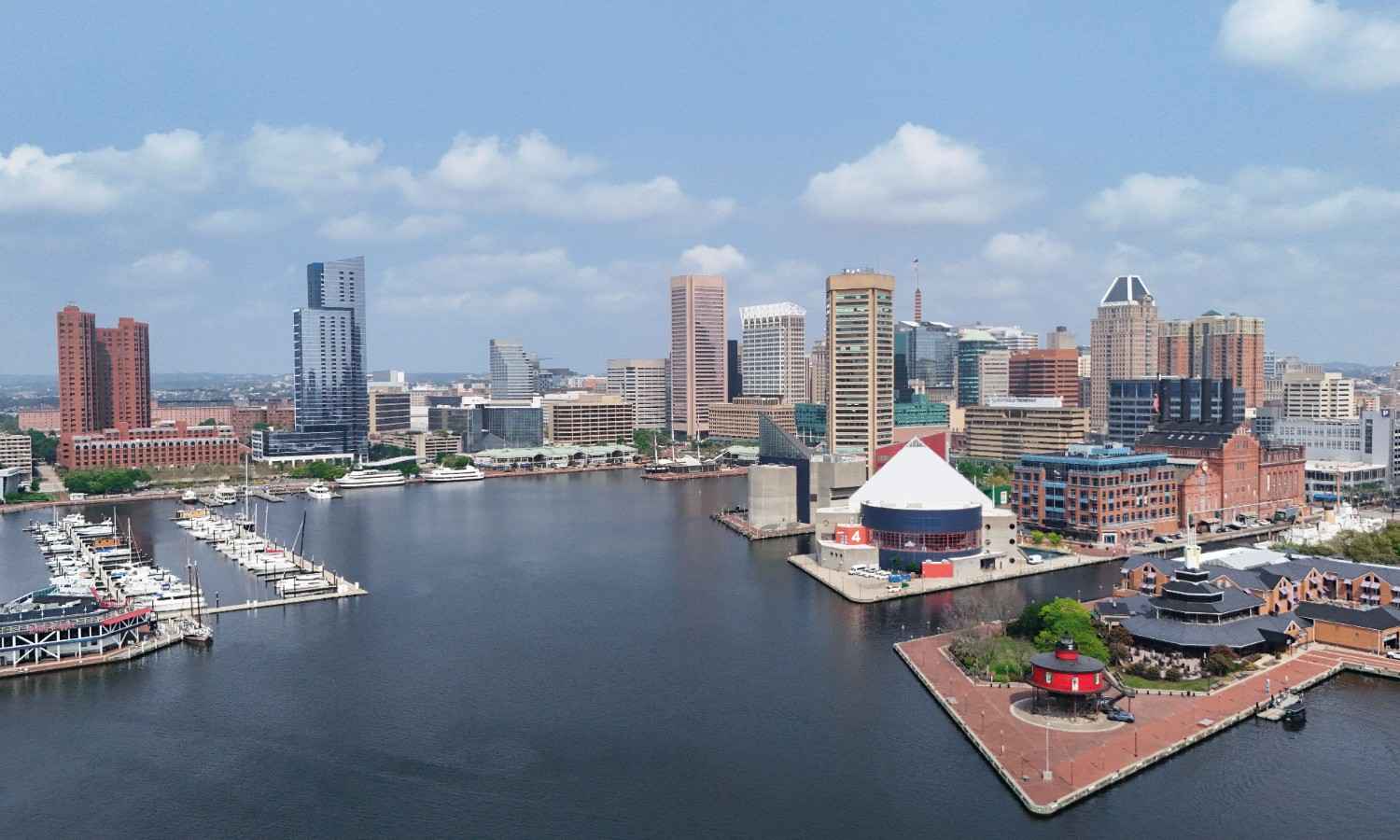
Baltimore packs a lot of personality into a compact footprint. The Inner Harbor and the National Aquarium anchor the tourist side, while Fells Point and Hampden deliver the local one, with independent restaurants, dive bars, and festivals throughout the year. It is a serious sports town, home to the Ravens and the Orioles, and passionate about both.
The food scene revolves around the Chesapeake, which means steamed blue crabs dusted in Old Bay, crab cakes, and waterfront seafood. Beyond that, the city claims a rich arts and literary heritage, from Edgar Allan Poe to a nationally regarded museum scene, plus quirky homegrown traditions that give Baltimore its unmistakable, slightly offbeat charm.
Location is part of the appeal, too. The waterfront promenade links the harbor neighborhoods on foot, and when you want a change of scenery, historic Annapolis, the Chesapeake beaches, and Washington, D.C. are all short drives or train rides away. Few cities give you this much to do without the price tag that usually comes with it.
Weather in Baltimore
Baltimore gets four distinct seasons. Summers are warm and humid, with temperatures often in the upper 80s and higher humidity thanks to the bay. Winters are moderate for the region, cold enough for a handful of snow events each year but rarely severe. Spring and fall are the standouts, long, mild, and ideal for the city’s endless calendar of outdoor festivals and waterfront strolls.
Frequently Asked Questions
Is Baltimore a good place to live?
For many people, yes. Baltimore offers big-city amenities, historic neighborhoods, and a strong job market at a cost of living well below comparable East Coast cities. The key is choosing the right neighborhood for your budget and lifestyle.
Is Baltimore expensive to live in?
No. Overall costs are right around the national average, and housing is notably cheaper, with a median home price roughly a third below the national figure. That affordability is one of the main reasons people move here from pricier markets like D.C.
Is Baltimore safe?
Baltimore has a reputation for crime, but violent crime recently fell to its lowest level in nearly 50 years and continues to decline. Crime is also heavily concentrated in specific areas, so most popular residential neighborhoods are considerably safer than the citywide numbers imply.
What is Baltimore known for?
Baltimore is known for its Inner Harbor, historic rowhome neighborhoods, blue crabs and Old Bay, the Ravens and Orioles, world-class institutions like Johns Hopkins, and a distinctive local culture that residents call Charm City.
What is the best area to live in Baltimore?
It depends on your priorities. Federal Hill and Canton suit young professionals wanting walkability and nightlife, Roland Park draws families, and Hampden and Mount Vernon appeal to those who want character and culture.
Making the Move to Baltimore
Living in Baltimore rewards people who do their homework: pick the right neighborhood, and you get genuine character, a strong job market, and East Coast city life at a price that feels almost too good. If you would rather have quick access to the city without living in it, nearby suburbs like Glen Burnie offer lower prices and an easy commute, and our trusted Glen Burnie movers handle that corridor daily.
When you are ready to settle in, our local moving team knows Baltimore’s tight rowhome streets and narrow parking better than anyone, and our unpacking tips help you feel at home fast. For a price tailored to your specific move, you can request a free moving quote anytime.